The Indian military has launched a significant attack on Karachi Port, one of Pakistan’s busiest and most strategically important maritime hubs, in a dramatic escalation of tensions between the two countries. The operation, which began early this morning, has caused serious civilian and military casualties in addition to significant damage to port facilities. Concerns about additional military escalation and regional instability are raised by the attack, indicating a dramatic change in the two nations long-standing rivalry.
India Pakistan Tensions Escalate: Indian Military Strikes Karachi Port
India Pakistan tensions have reached a critical point today, with the Indian military launching a significant attack on Karachi Port, one of Pakistan’s most strategically important maritime hubs. This escalation marks a dramatic shift in the long-standing rivalry between the two nuclear-armed nations, causing severe civilian and military casualties, as well as substantial damage to critical port facilities. (India Pakistan tensions)
India’s Justification for the Karachi Port Attack
India’s military operation at Karachi Port was described as a direct response to Pakistan’s alleged support for terrorism targeting Indian citizens. Check out our previous post on India’s fight against terrorism.
Strategic Importance of Karachi Port
India and Pakistan have long-standing territorial disputes, most notably over the region of Kashmir, and the attack coincides with heightened tensions between the two countries. Cross-border terrorism, hostile rhetoric from both sides, and military clashes along the Line of Control (LoC) in Kashmir have all contributed to these tensions in recent years. With both nations accusing one another of sponsoring terrorism and breaking ceasefires, diplomatic attempts to defuse the situation have mainly stalled.
Situated on Pakistan’s southern coast, Krachi Port holds great strategic significance. Over 60% of Pakistan’s total cargo passes through this port, which is the biggest in the nation. The assault on this vital infrastructure demonstrates how India has shifted from waging conventional border conflicts to focusing on vital economic and civilian assets, which has raised concerns about an all-out war in the region.

India’s Justification for the Karachi Port Attack
In a statement issued by the Indian Ministry of Defence, the government justified the operation as a “targeted strike against Pakistan’s military assets and infrastructure used by terrorists.” The statement emphasized that the attack was not intended to escalate the situation further, but rather to deter what India perceives as Pakistan’s continued support for militant activities across its borders.
Targeted Strike in Response to Cross-Border Terrorism
India’s military operation at Karachi Port was described as a direct response to Pakistan’s alleged support for terrorism targeting Indian citizens. Indian authorities have long accused Pakistan of harboring militants, which has fueled deep mistrust.
Official Statements from the Indian Government
The Indian Ministry of Defence issued a statement justifying the strike as a “targeted strike against military infrastructure used by terrorists”. Prime Minister Narendra Modi emphasized India’s commitment to protecting its sovereignty.
Pakistan’s Reaction to the Indian Military Strike
Condemnation and Declaration of Retaliation
Pakistan has denounced the attack as an act of aggression and a breach of international law. Prime Minister Shehbaz Sharif pledged to take “all necessary steps” to protect Pakistan’s sovereignty and territorial integrity.
Pakistan’s Military Response
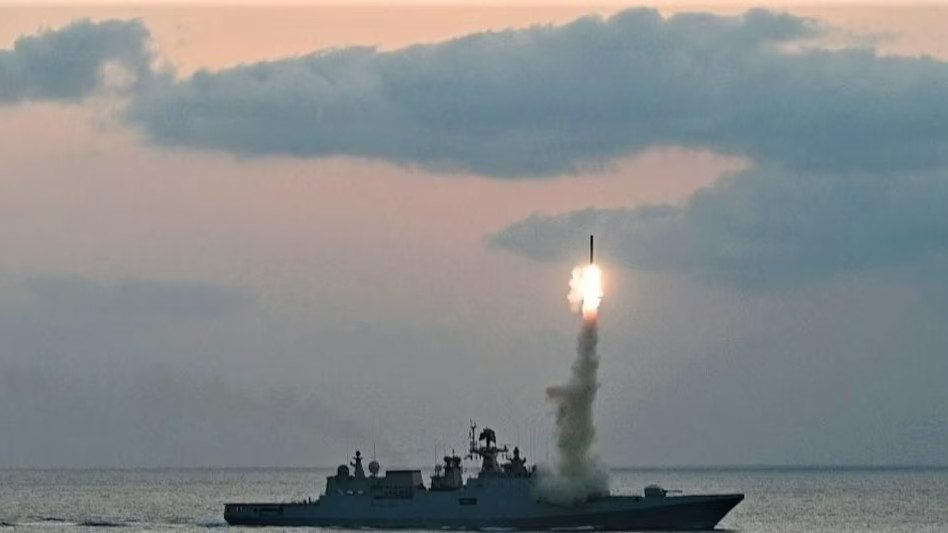
According to Pakistan’s military, they successfully engaged Indian aircraft over the Arabian Sea and have bolstered defenses along the southern coast, signaling that they are prepared to escalate if necessary.
Global Responses to the India-Pakistan Conflict
China, a significant Pakistani ally, denounced the attack as well and urged India to exercise restraint and adhere to international standards. A peaceful settlement of the dispute was demanded by Beijing’s foreign ministry, which cautioned that escalation might have “severe consequences for regional security.”
United Nations Calls for De-escalation
The United Nations has urged both India and Pakistan to exercise maximum restraint and avoid further military action to prevent a full-scale war in the region. UN Secretary-General António Guterres stressed the importance of diplomatic solutions.
US and China Weigh In on the Crisis
The United States reiterated its support for India’s right to self-defense against terrorism while also urging restraint to avoid destabilizing the region. Meanwhile, China, a close ally of Pakistan, condemned the attack and called for a peaceful settlement.
The Path Ahead: Is a Full-Scale War Inevitable?
Escalation Risks: Nuclear Threats and Regional Instability
As both India and Pakistan are nuclear-armed, the risk of nuclear escalation is a primary concern. Any further military action could potentially lead to a disastrous outcome for South Asia and the world.
Diplomatic Efforts to Prevent Conflict
The international community has a critical role to play in urging peace talks and de-escalation between the two nations. However, with both sides blaming each other, achieving peace remains a daunting task.
Conclusion: The World Watches as India-Pakistan Tensions Reach New Heights
With global powers expressing concern over the escalating India-Pakistan conflict, the world is anxiously waiting to see if diplomacy can halt further violence or if this event will mark the beginning of a new chapter in the nations’ long-standing rivalry.